Before setting off on our travels we discovered an organization called Wings over Water, based in Manteo, NC. The list at the bottom of their home page displays the sponsors, but it is heavily supported by the US Department of Fish and Wildlife and their National Wildlife Refuges (and yes, your tax $$; applause please – this is a worthy cause). The trips are inexpensive, and the beauty of them is that you show up at the time and place specified and you’re taken in hand by experienced (well, mostly – we had one exception), led to the places where the action is, and are in the company of others who are interested in the same kind of experience.
One of the things about going birding with other people is that they invariably know more and have better equipment than we do. The show-off factor almost always makes everyone very generous about sharing both.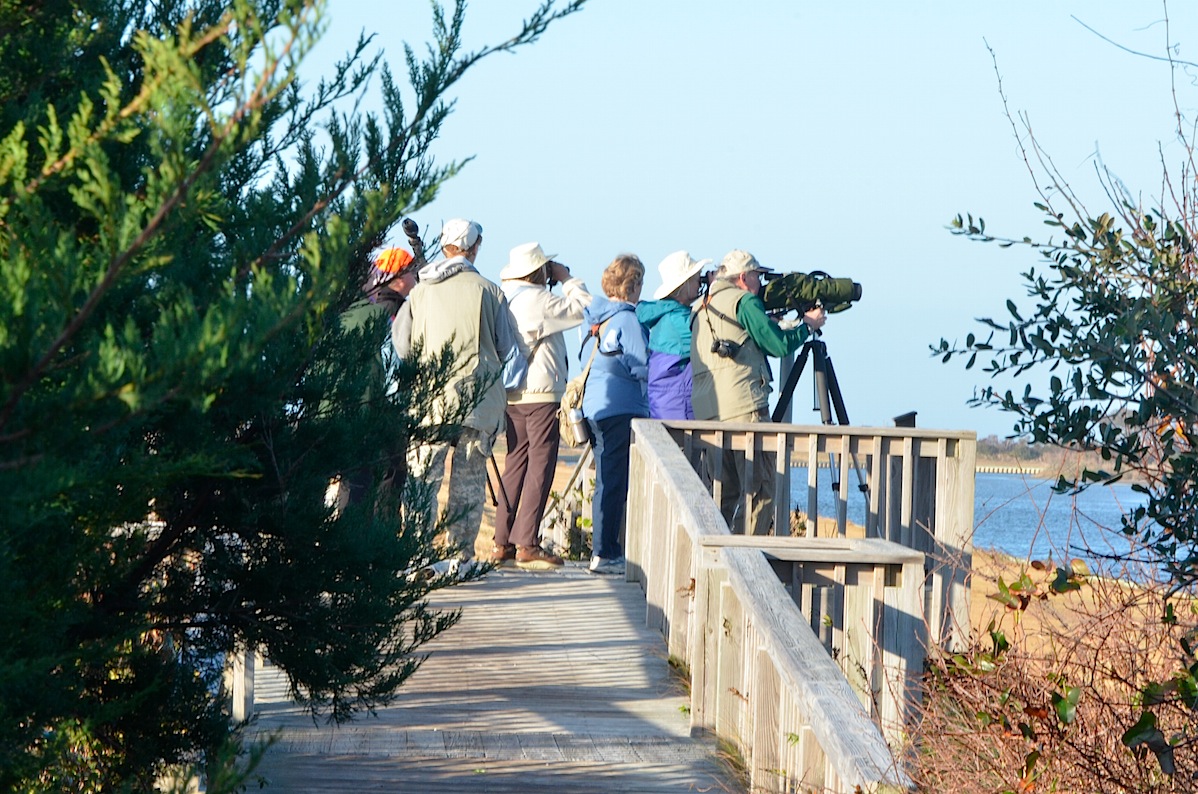
We get to walk – not too fast and with frequent stops – into places we would not otherwise know how to reach (or be allowed to: some are closed except for this week of programs). If alone, it would probably take us an hour to identify the small black spot on the water. With experts, you take a peek in their scopes, et voilà, your merganser or tundra swans. It is quite magnificent! Beginner’s luck occasionally allows us to spot something interesting first, so we “pay back” the experts in small ways.ß
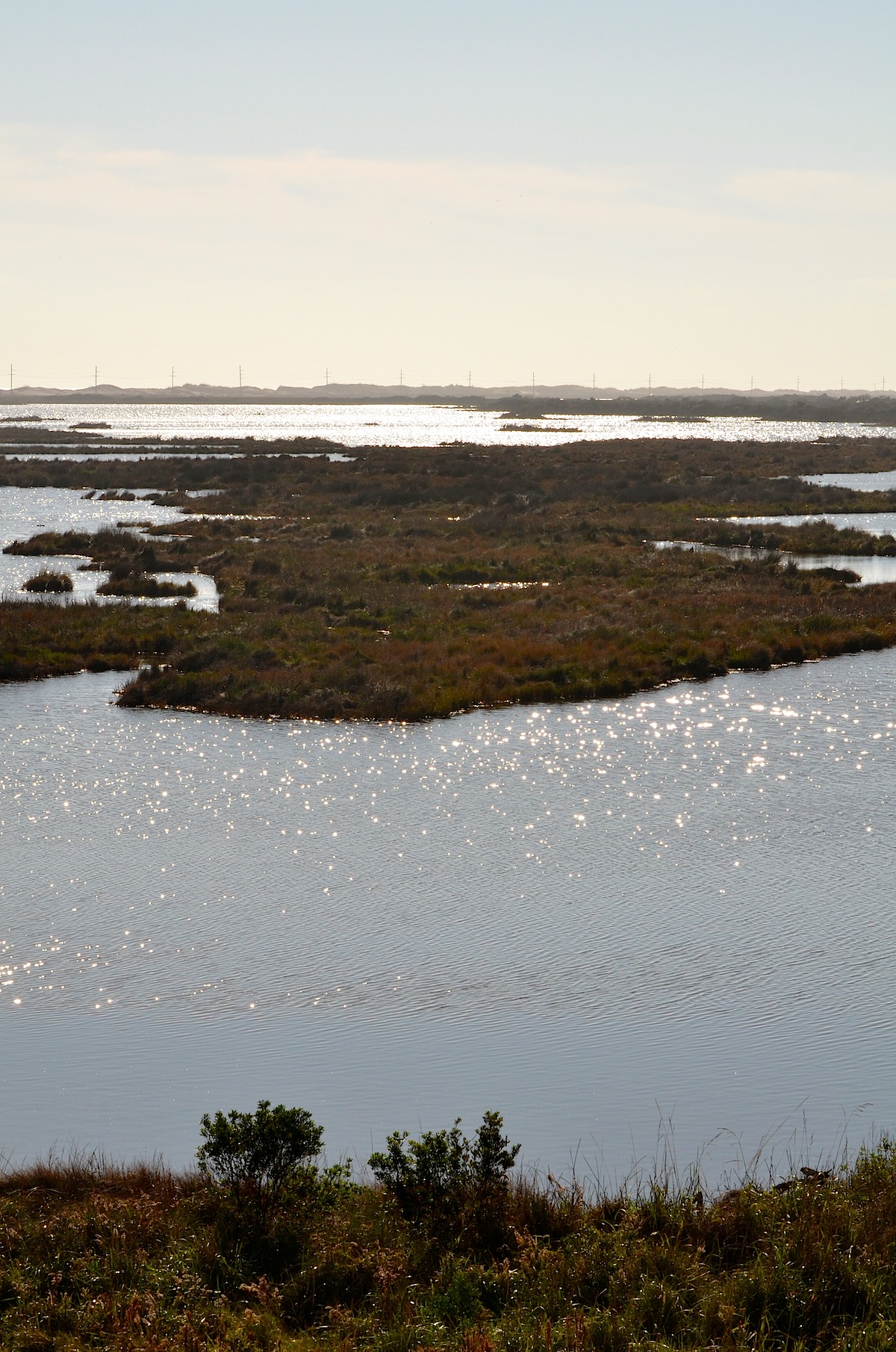
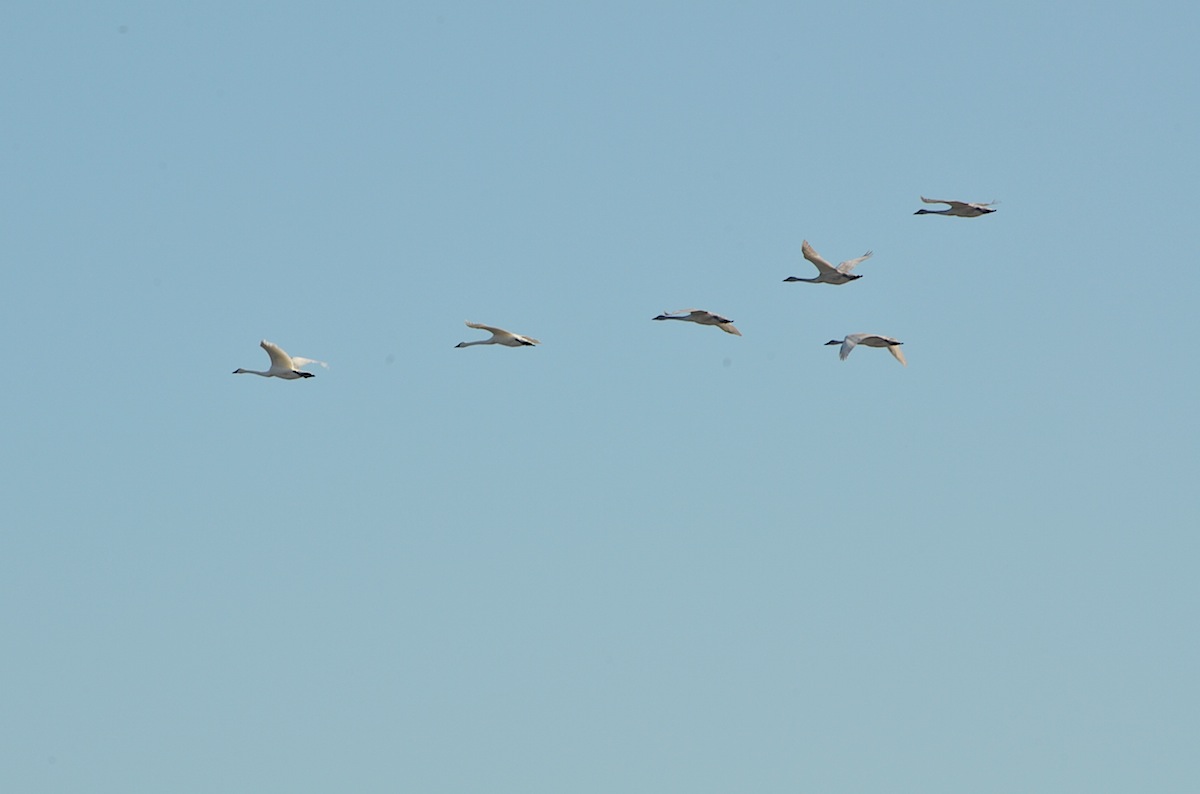
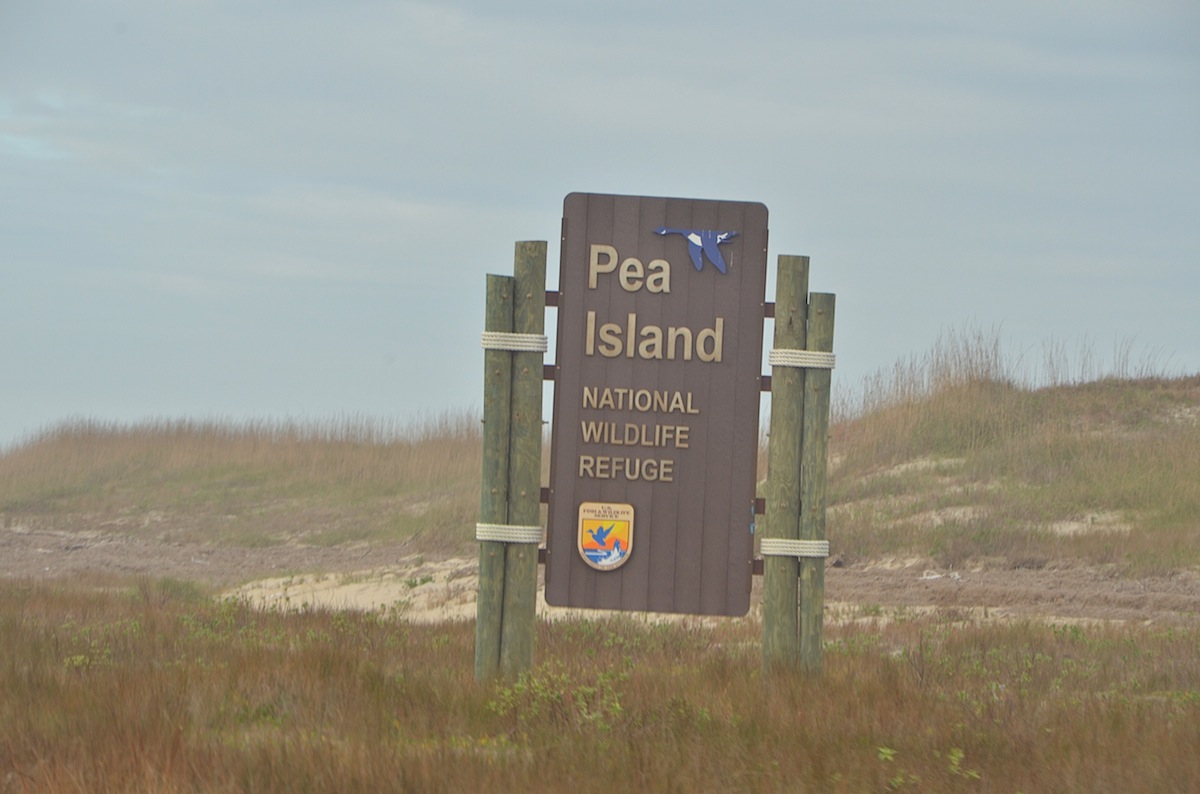
The first morning – Tuesday, November 8th – we walked around the edge of North Pond on Pea Island. The two huge ponds in this refuge were built by the Corps of Engineers in 1936 (don’t you wish your tax $$ for the Corps always were so well used!) and saw a great many geese, ducks, egrets, ibis, swans and small shorebirds. 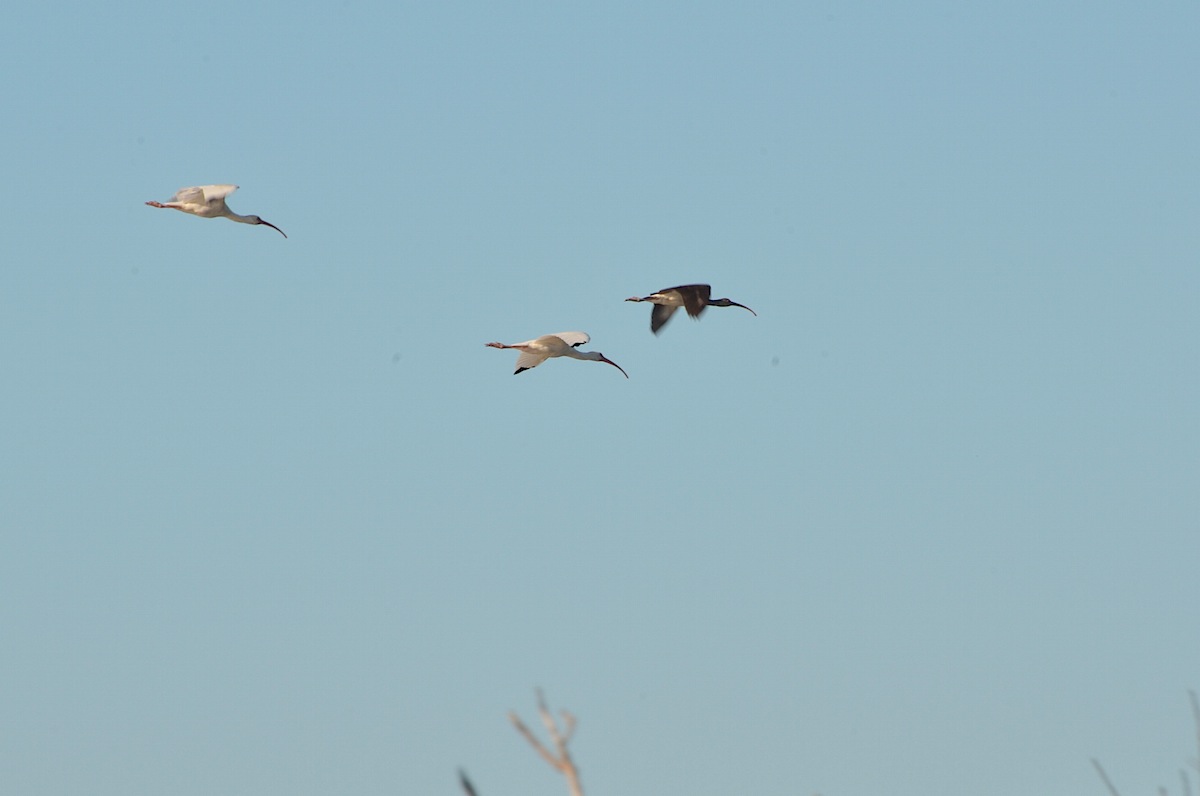
 <
<
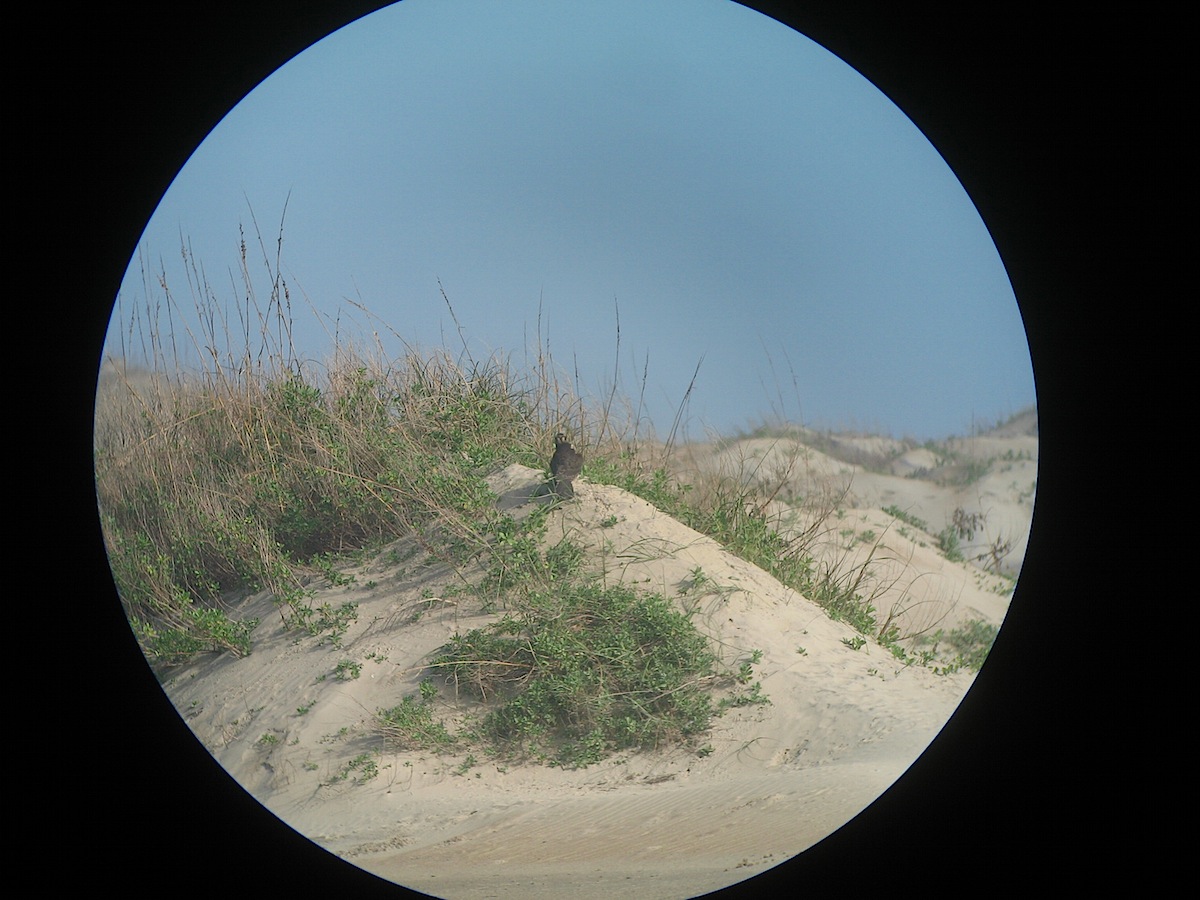
The next morning we went to The Hook, near the Cape Hatteras lighthouse. An intrepid widow in her late seventies, whose husband had been an ardent birder, drove us and a bird photographer’s wife onto the beach in her Jeep, stopping every time we saw a flock of ducks or huddle of shore birds. It was a magnificent spot where the locals claim the Labrador current runs into the Gulf Stream off the Cape that is known as the Graveyard of the Atlantic. Identification was largely guesswork, plus some expertise gleaned from the previous day’s serious birders, until our driver got a call from the next day’s tour leader, who just happened to be scouting out the beach on the other side of a large tide pool. By the time we joined him, he had two powerful scopes focused on an immature Peregrine falcon on a sand dune.
He then turned one of the scopes around and showed us three terns – a Forster’s, a Sandwich, and a Royal, all standing in a line at the water’s edge. A few more firsts were then found among the small waders at the edge of the surf before we disbanded and headed to lunch at the Buxton Munch – one of the last Hippie restaurants left on the Outer Banks. Excellent.
The Hook at Cape Hatteras is a spectacular place: dunes, wild surf and currents, miles of beach. You know you’re standing at the edge of a fabled meeting place of ocean and land and it seems to match up to your expectations. The surf was explosive off the point, and were were casually told it looked pretty calm. We knew for a certainty we wouldn’t care to be anywhere within many many miles of it in any size boat.
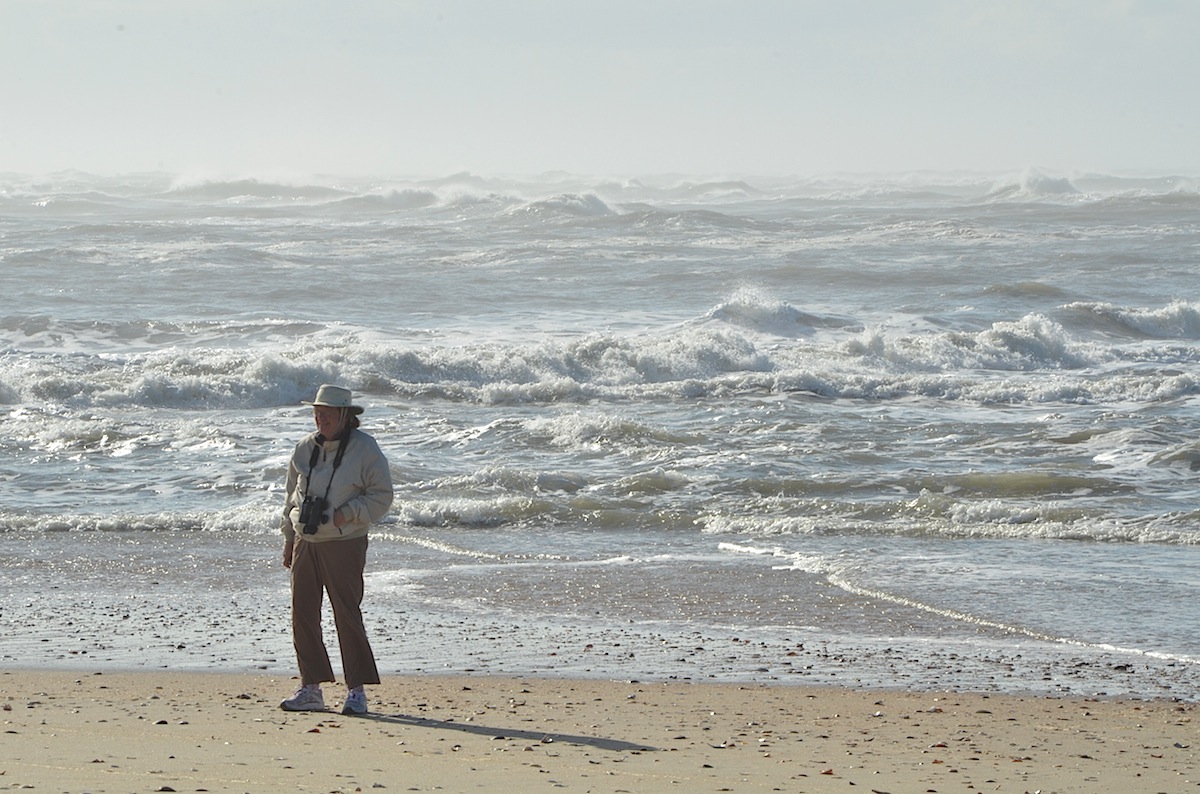
See a movie clip of it here.
Besides a lot of grizzly tales of shipwrecks, the museum at the other end of the island yielded some interesting information about the areas renowned pirates. A favorite picture is included for Estelle – in case she’s lacking in career ideas.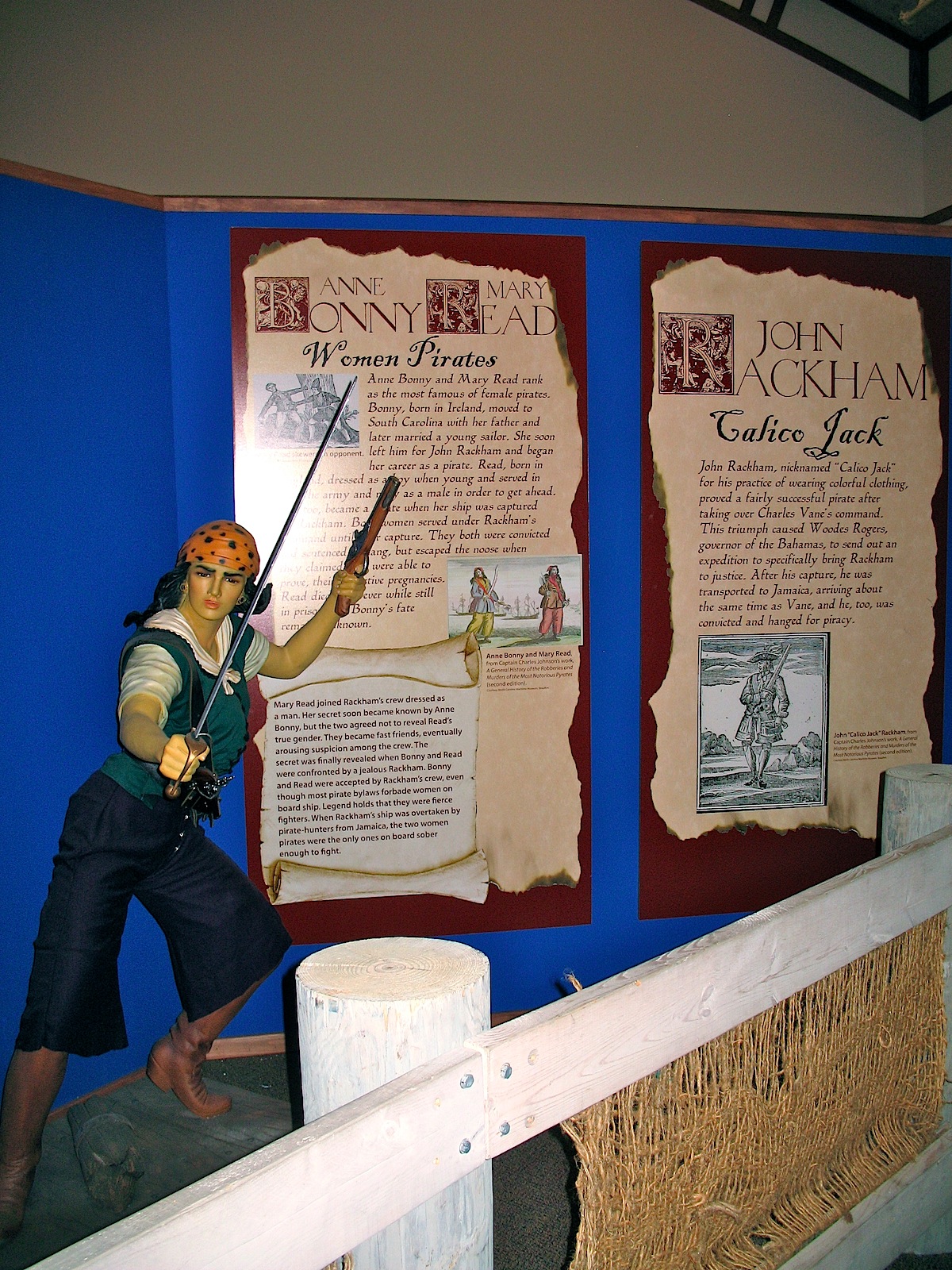
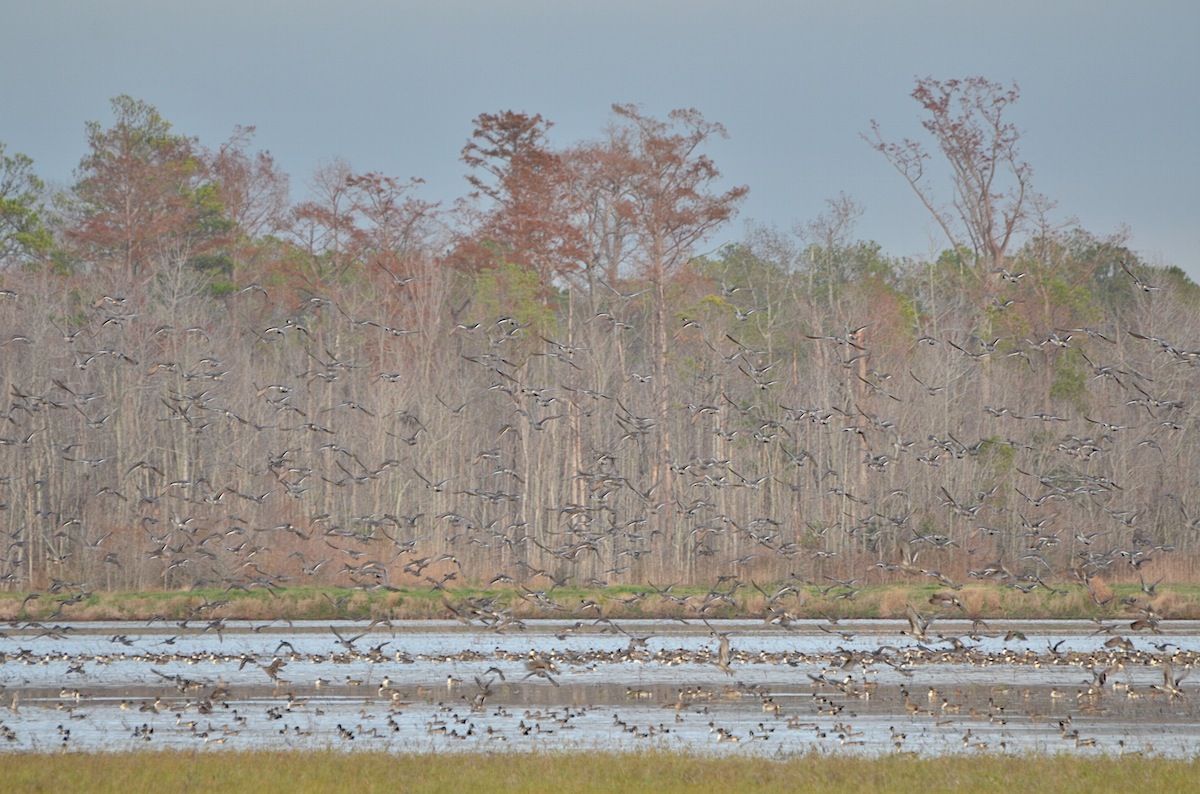
Thursday’s expedition was a seriously boring three-hour ride on the back of a truck-drawn flatbed on wheels. We sat on hard wooden benches and travelled down dirt roads along fields where 10% of the farmers’ crops had been left standing and been recently flooded with water from the surrounding swamps for the use of migrating waterfowl. For three hours, we saw nothing but a few hawks, meadowlarks and turtles as a cold wind came up and a young volunteer chatted unknowledgeably about the surroundings. Then he spotted some bear scat, then some fresh bear tracks,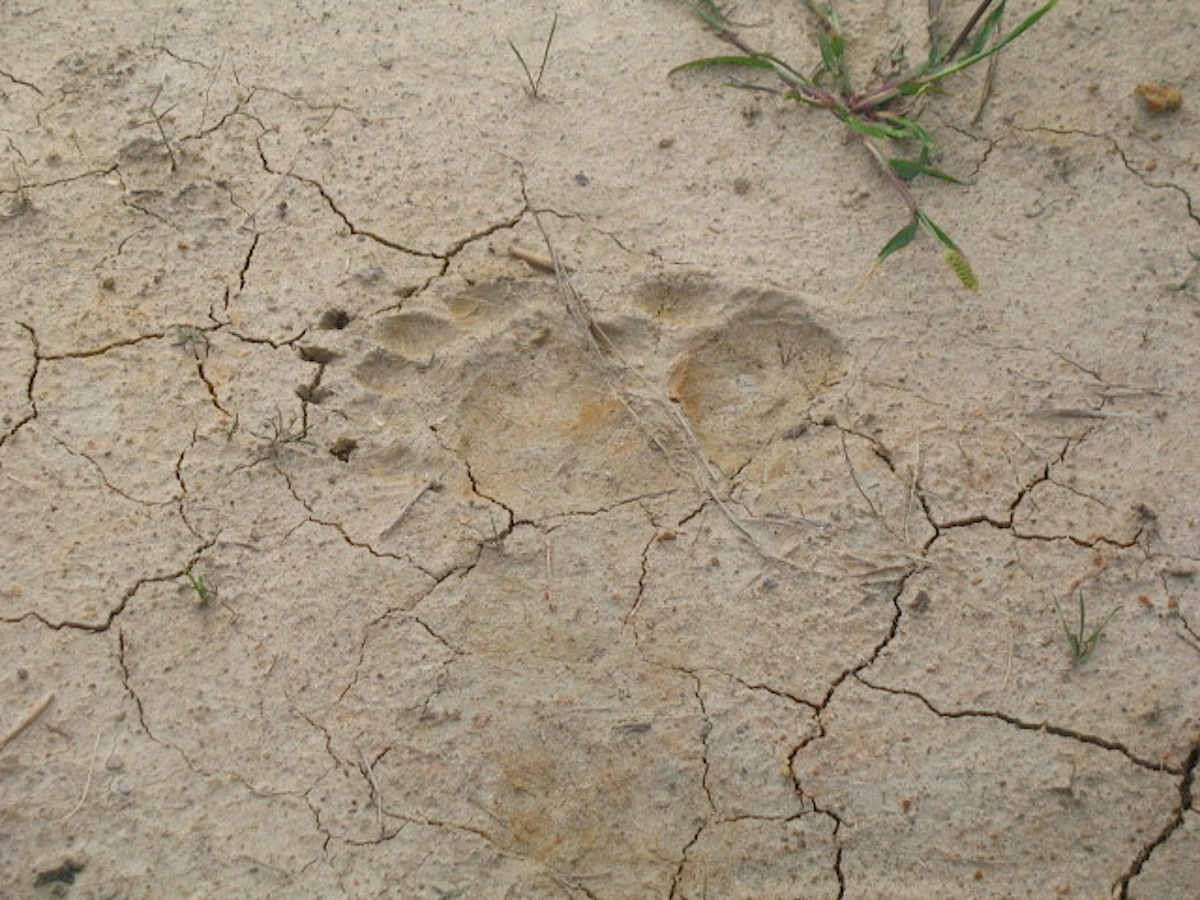 and a few minutes later a young black bear helping himself to grain in a distant field. By this time, we were late back and couldn’t stop for the truly magnificent sight of hundreds of pintail ducks feeding in flooded fields on the other side of the road, so there was no way of verifying the presence of other kinds of ducks among them.
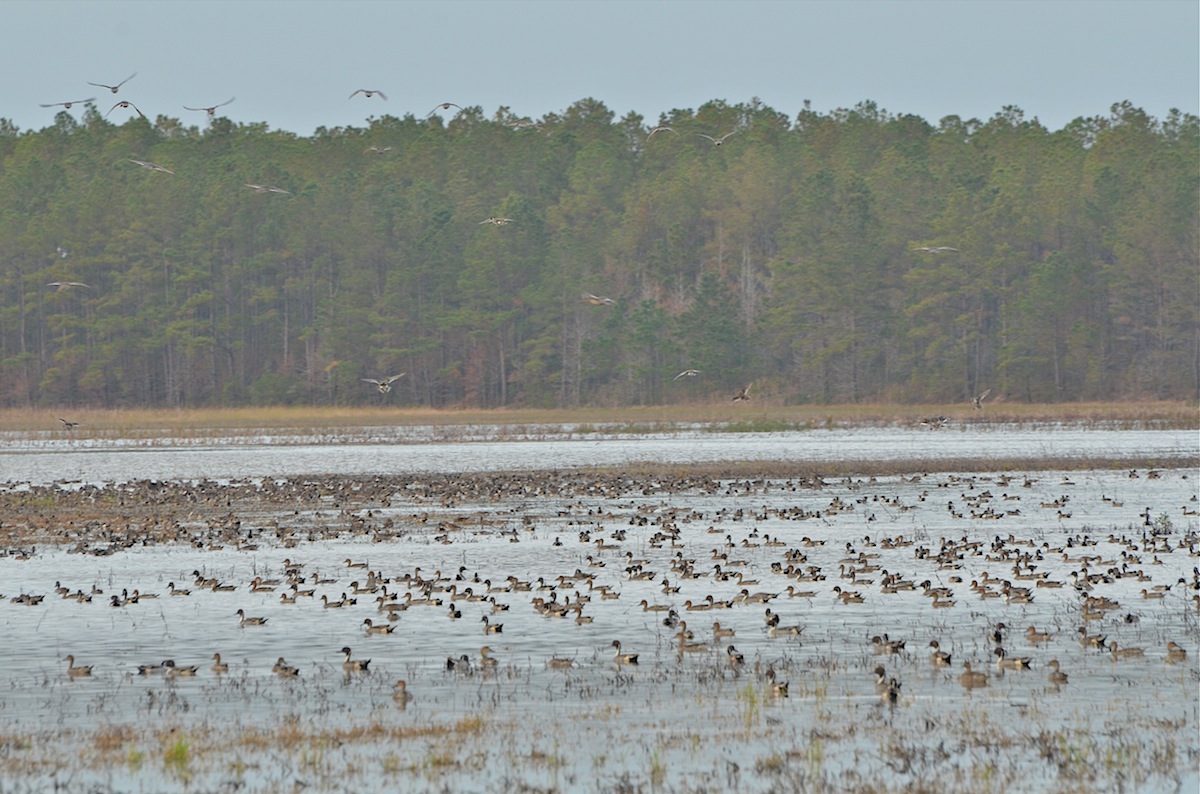 <
<
Friday Dan went off in the afternoon for a WoW adventure billed as a walk through tidal swamps. Conditions were mixed: bright sunshine, crystal-clear air but with a howling wind out of the NW and about 50°. Boots were suggested, but upon inquiring they said sure, wear sneakers and shorts. So Dan wore shorts, to the amazement of the other participants, with a game explanation that everyone in Maine wears shorts all winter.
Thrashing through marsh grass (and 3″ deep water) was fine; trying to locate shy, devious little birds like Saltmarsh 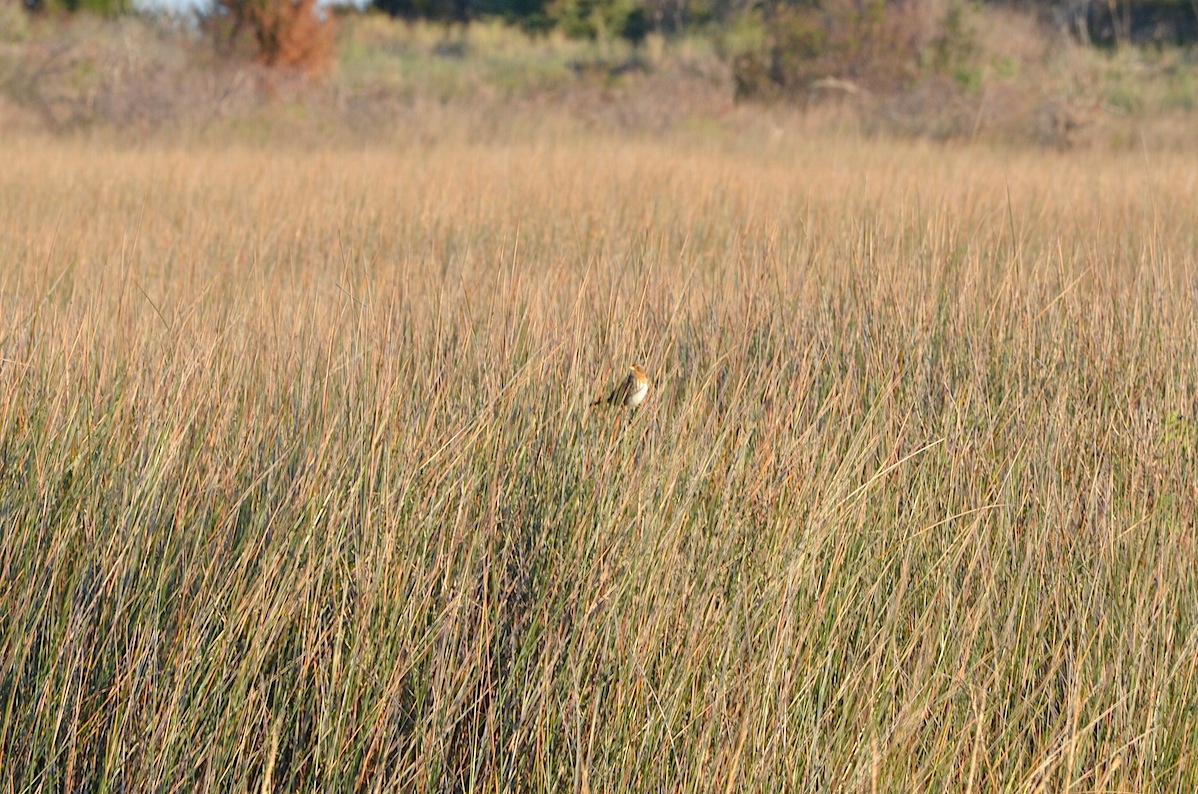 and Marsh Sparrows was less entrancing, but they were found. Also seen: American Oystercatchers
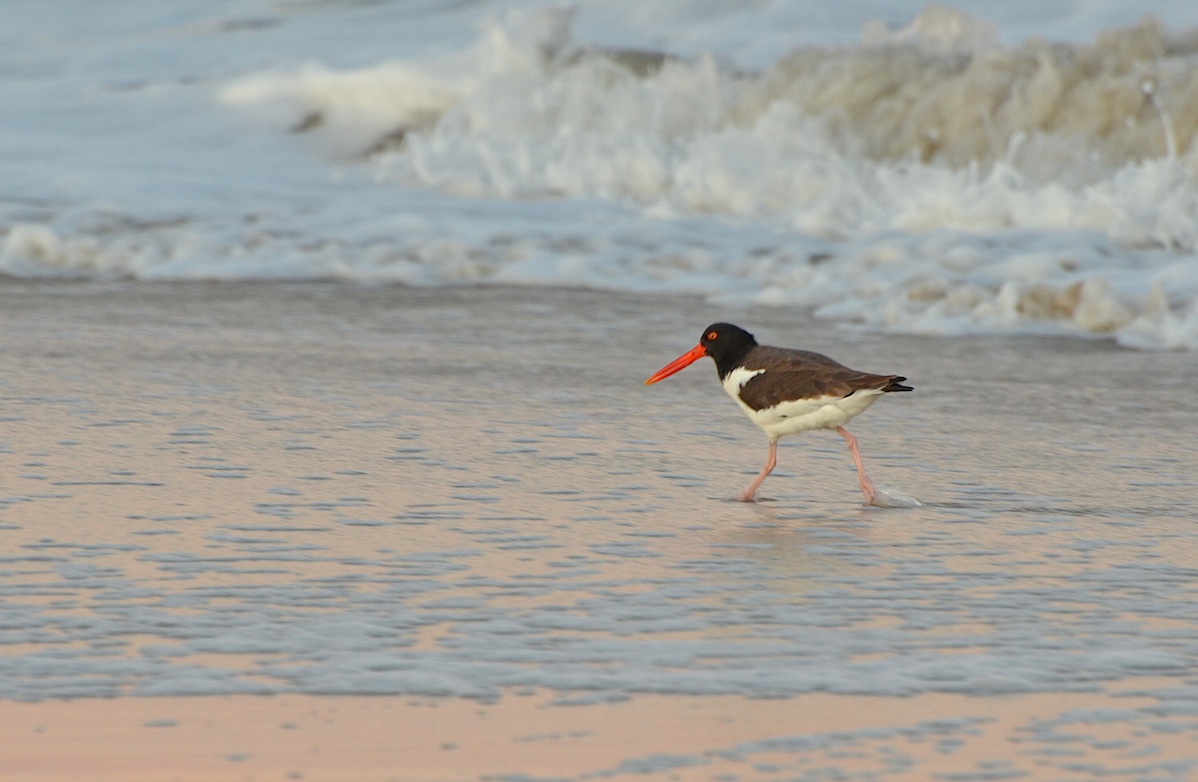 and a flight of Tundra swans incoming from Canada to their wintering grounds in Pea Island NWR: a magnificent sight in the setting sun and honking to each other as they lined up for the approach.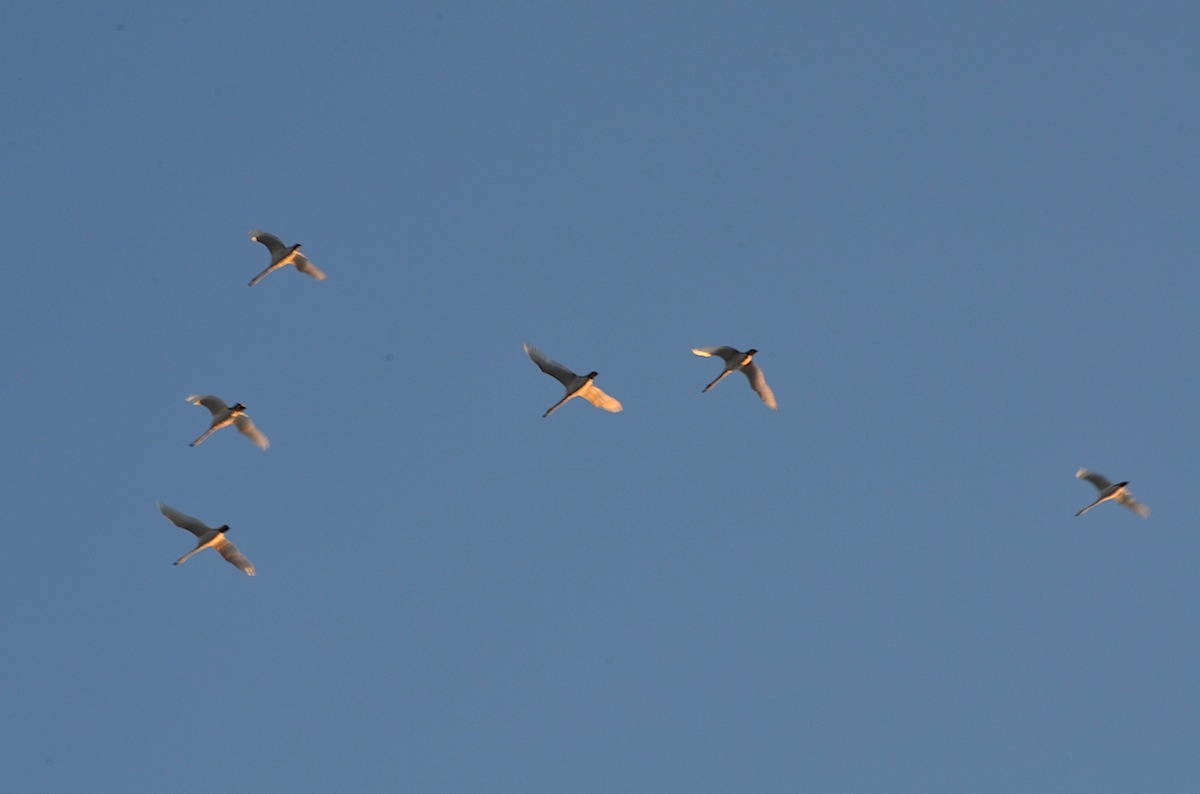
All in all, a terrific, well-organized week of seeing beautiful birds and places, in good company, with no lines at restaurants (the few remaining open that is), all this by the ocean. What more could you ask?
Post a Comment